Showing posts with label mining. Show all posts

18 September 2011

Oil Rigs and Energy Sustainability

Off-shore oil drilling is a massive system that few people truly can wrap their heads around. We can go down to the coast and look out and see an occasional oil rig in the distance, thinking that there are a few out there. The reality is that oil companies are in high gear, working to extract every last drop they can from the Earth to feed consumer wants (not needs). Deepwater Horizon was a horrible tragedy, but the odds that something like it was going to happen were in it's favor.
http://cache.gawkerassets.com/assets/images/12/2010/05/gulf_of_mexico_oil_spill.jpg

There were around 3,700 oil rigs in the Gulf of Mexico alone in the early part of last year. The volume of oil being extracted is as far from sustainable as you can imagine. One of the things that the majority of people do not understand is how energy from natural resources is interconnected to population growth and global economies. Without cheap energy, our way of life is not sustainable. Being able to recognize the stark reality of this situation is what is driving so many people and companies to find alternative solutions for energy that are sustainable as well as reduce the negative impact on our environment. If our collective energy needs can be reduced and those sources replaced with more practical solutions for future efficiencies, our survival and way of life can be assured.
Farron Cousins | The Ticking Time Bombs In The Gulf of Mexico

31 July 2011

Tech Talk - Gulf of Mexico production and hurricanes

The summer brings back hurricane season, with the threat that such storms bring to the oil and gas well operations in the Gulf of Mexico. And the National Oceanic and Atmospheric Administration (NOAA) has noted that
The Atlantic basin is expected to see an above-normal hurricane season this year, according to the seasonal outlook issued by NOAA's Climate Prediction Center . . . 3 to 6 major hurricanes (Category 3, 4 or 5; winds of 111 mph or higher)
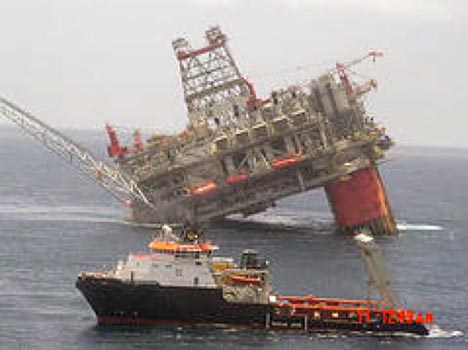
The lessons of this vulnerability were, perhaps, more than most years, evident in 2005. The first sign of problems came with the arrival of Hurricane Dennis in July. It was a storm which severely damaged the BP deep water Thunder Horse drilling platform


Thunder Horse after Hurricane Dennis


As that season wore on, the vulnerability of the platforms in the Gulf and the refineries that border it, were exposed in more intensity with the passage of Hurricanes Katrina and Rita. These threats and their analysis were one of the factors that helped, in that formative year, to bring an audience to the pages of The Oil Drum. The Gulf is now home to thousands of wells which, as the evidence from the Deepwater Horizon disaster last year reminded us, has moved further and further away from shore. That vulnerability is perhaps illustrated by a map showing the path of Hurricane Rita through the oil platforms off the Texas and Louisiana coasts.

More: http://feedproxy.google.com/~r/theoildrum/~3/XKeCSNGLX-I/8201

14 February 2011

Fracking the World for Natural Gas

Water pollution from natural gas mining (fracking, short for hydraulic fracturing) destroying rural deep well water sources, thanks to our legislators and large oil and gas companies. But it doesn't affect those of us in urban environments directly, yet.


I still don't think the EPA is much more than an ineffective lapdog for those companies with enough resources to staff the agency with their own former employees. Who with any sense really thinks that the EPA, and other similar government agencies, have the best interests of the People in mind before the profits of companies like Halliburton.

http://cleantechnica.com/files/2010/05/Natural_Gas_Fracking.jpg

The largest domestic natural gas drilling boom in history has swept across the United States. The Halliburton-developed drilling technology of "fracking" or hydraulic fracturing has unlocked a "Saudia Arabia of natural gas" just beneath us. But is fracking safe? When filmmaker Josh Fox is asked to lease his land for drilling, he embarks on a cross-country odyssey uncovering a trail of secrets, lies and contamination. A recently drilled nearby Pennsylvania town reports that residents are able to light their drinking water on fire. This is just one of the many absurd and astonishing revelations of a new country called GASLAND. Part verite travelogue, part expose, part mystery, part bluegrass banjo meltdown, part showdown.

http://gaslandthemovie.com/

http://midhudson.info/news/wp-content/uploads/2009/09/gasdrilling.jpg

Since everyone wants to keep consuming energy at a massive rate (your recycling bin on the curb doesn't make up for this), we have to hope our country can create new legislation to make a difference. The Energy Policy Act of 2005 let large natural gas mining companies off the hook from polluting the air and water.

http://www.texastribune.org/texas-environmental-news/environmental-problems-and-policies/dish-mayor-states-air-monitor-gives-false-readings/

http://wilderness.org/userfiles/haze-surrounding-home-during-fracking-near-PavilionWyoming-JohnFenton.jpg

Natural gas mining companies like Encana are raping the land and destroying the ability to drink well water to such a devastating point that the water will never be drinkable in the lifetime of current or future residents. The industry lobbies heavily against any legislation that keeps them in check. Do your part, contact your representative and voice your opposition to this continued destruction. If allowed to continue, larger cities may be the next to fail to meet their water needs. Imagine the New York metro unable to provide drinkable water to it's residents...

http://www.americanprogress.org/issues/2010/04/fracking.html

https://secure.wikimedia.org/wikipedia/en/wiki/Hydraulic_fracturing

http://www.sourcewatch.org/index.php?title=Fracking

http://www.npr.org/templates/story/story.php?storyId=104565793