Showing posts with label Environment. Show all posts

24 January 2012

Battery Recycling and Recyclable Batteries


The convenience of portable electrical energy in the form of batteries has the side effect of producing massive amounts of battery waste. Recycling efforts have turned the resulting pollution around and now lead-acid batteries have the highest recycling rate of any material in the US at 93%. The ability to recharge and reuse those batteries helps to reduce the waste generated, but smaller batteries are still mostly single-use and contribute excessive waste to the environment.

What Are Lead-Acid Batteries?

Lead-acid batteries are rechargeable batteries that are found throughout the world and are commonly referred to as “car batteries.” These batteries are made up of lead plates and sulfuric acid that are contained in a plastic case. The lead from used lead-acid batteries (ULABs) that have lost their ability to hold a charge is commonly recycled.

How Does Recycling Lead-Acid Batteries Create Lead Pollution?

Unregulated and informal recycling of lead-acid batteries, often conducted in homes or backyards, can lead to high levels of environmental lead contamination. These processes usually involve breaking the ULABs open by hand or with an axe, which can lead to the improper release of battery acid into the surrounding soil. Once the batteries are broken open, the lead is removed and often melted in rudimentary stoves that allow lead dust to escape and contaminate the surrounding air, water and soil.

What Are the Human Exposure Pathways for Lead from Lead-Acid Battery Recycling?

The most common exposure pathway for lead is through the inhalation or ingestion of lead dust. Young children are particularly at risk of lead exposure because of their proximity to the ground and hand-to-mouth tendencies. Because lead battery scraps are often left out in the open, it is common for children playing in or around these dump sites to inadvertently pick up stones or soil contaminated with lead.

What Are the Health Risks Associated with Lead Exposure?

The health effects of exposure to lead can be both acute and chronic, and the problems caused by lead poisoning are particularly dangerous and severe for children. Health problems associated with lead poisoning can include reduced I.Q., anemia, neurological damage, physical growth impairments, nerve disorders, pain and aching in muscles and bones, memory loss, kidney disorders, fatigue, and headaches. Exposure to high concentrations of lead can cause seizures, delirium, coma, and in some cases, death.

Fact Sheet Lead-Acid Battery Recycling and Lead Pollution Blacksmith


Dry cell batteries used in smaller devices contain alkaline, carbon zinc, mercuric-oxide, silver-oxide, zinc, and lithium, which are dangerous pollutants if not properly disposed of. Recycling these batteries is one effective way to cut down on those minerals entering the ecosystem as pollution, but replacing those single-use batteries with rechargeable ones makes a much greater impact.

http://uwadmnweb.uwyo.edu/pplweb/sustainability/Images/35442.jpg

Sales of rechargeable batteries are increasing yearly, selling at about twice the rate of disposables today. That's a good start, but still leaves much room for improvement. Eventually, rechargeables lose their effective ability to power devices and must be disposed of through recycling programs, but the savings both in environmental and economic terms is significant.

http://maxcdn.fooyoh.com/files/attach/images/591/099/333/001/batteries.jpg

With Texas being one of the three states with the most battery waste collected, the opportunity to set an example for responsible use and disposal is here. There are many places to recycle spent batteries, with some free services available around the country.


Call2Recycle, North America’s only free battery and cell phone collection program, announced a record-breaking collection of 6.7 million pounds of rechargeable batteries, a 10.1 percent increase from its 2009 collection rate.

Battery Recycling - Earth911.com

15 January 2012

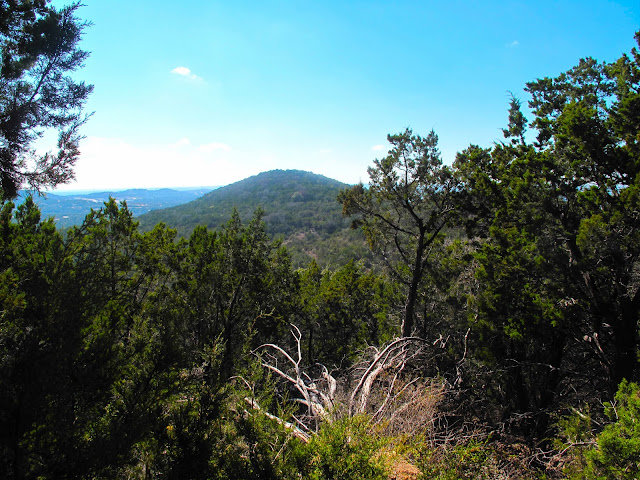
Texas' Balcones Canyonlands Preserve Balances Ecology

http://3.bp.blogspot.com/_dk_nGYz1zE8/TUXshbf2sBI/AAAAAAAAUrI/lsBVr87bk1o/s1600/IMG_1107.jpg

The central Texas region was once home to diverse wildlife, but that diversity has been damaged by human migration and development. Exploration began almost as quickly as Europeans discovered the New World. Colonization began in the eighteenth century, with significant settlements increasing within a century. The state population grew vastly, with the area around Austin increasing to over one million today and rising. That population boom and development has had negative effects on the indigenous populations and the native flora and fauna. Many plants and animals in the region have been classified as endangered, with the Balcones Canyonlands Preserve system supporting eight endangered species.

Changes in Ecosystem Dynamics

The hydrologic cycle is the primary sustaining force behind the existence of life on this planet, though more obvious in areas like central Texas, which receive lower annual rainfall. The average is 30 inches per year, though some years are affected by drought, giving the region a desert-like appearance. The 2011 summer was one of the hottest and driest on record, but the record lows in lake levels are not completely due to lack of rainfall. Those reductions in the water supply are also a side effect of excessive commercial and industrial use. With preserves such as Balcones, we can see that over longer periods, the ecology does not go through the wild fluctuations that developed lands do.

The mining industry, for example, uses vast amounts of water to extract minerals like oil and natural gas. Extracting oil from the Canadian tar sands is highly energy-inefficient, with only about 10% crude by volume, but relying on large amounts of input energy and vast amounts of water, which returns to the environment in a polluted state. Natural gas is already a big extraction industry in many regions in Texas, with some developers looking to the preserved regions in the central part of the state. Natural gas fracturing also requires a great amount of water, which returns to the environment polluted with compounds required for pressure fracking. In looking to natural resources to solve our growing energy problems, we need to consider no only the environmental impact, but the net energy result.

Impact of Humans on Biogeochemical Cycles

By maintaining this preserve of nearly 30,500 acres, those species are able to be sustained, with the local ecology benefiting from cleaner air and water as well. Outside the preserve, efforts are also made to observe other species that are affected by human development. The Jollyville Plateau salamander lives mostly in watershed regions and natural drainage areas. In areas where watersheds are impacted by development, salamander populations reduce significantly.

http://2.bp.blogspot.com/_dk_nGYz1zE8/TUXt_K_uXEI/AAAAAAAAUrw/BHniNqjHtAA/s1600/IMG_1125.jpg

Industrialized agriculture efforts provide the ability to raise more crops than through manual farming techniques of generations in centuries past, but also require significant amounts of both water and other natural resources, like oil. That increased need for the availability of those resources for life-sustaining food leaves the population reliant upon the availability and affordability of those resources to simply live. Before agriculture became industrialized and urbanized, a much greater portion of the population raised their own food. This paradigm shift has created a situation where a growing majority relies upon others to provide those nutrients we need to live.

Woodland areas like those wiped out for development and livestock grazing help to mitigate climate change. By preserving large areas of our environment from further alteration, we can also preserve biogeochemical cycles, maintaining a balance in the ecology. Even natural and managed burns can help to regulate and refresh the local environment, promoting subsequent growth after fires, making land fertile again. By maintaining a natural balance, the local ecology in Balcones can continue to cycle the elements and nutrients required for a healthy ecology throughout, promoting healthy lithosphere, hydrosphere, and atmosphere, which is necessary to support the biosphere.

Management and Restoration of the Ecosystem


Learning through observation and application of the scientific method help us to recognize the need to combat the degradation of our ecology. Those observations give us insight to the negative effects of our actions on our environment, leading to potential solutions to either conserve or preserve as needed to prevent additional damage. The Balcones Canyonlands Preserve is one such effort, setting large amounts of land aside, preventing development and overuse of it’s resources, in an effort to maintain the natural ecology required for both native species and the human population.

The central Texas region surrounding the capitol city has a wealth of research and knowledge gathered from observations and experiments in conservation efforts. Conservation groups, governmental agencies, and residents are working together to maintain large green spaces in developments, reducing waste, encouraging environmentally friendly alternatives to wasteful practices like transportation and water usage. Austin is a very green city in a time when green is a catch phrase, sometimes a marketing tool.

http://4.bp.blogspot.com/_dk_nGYz1zE8/TUXtqfP1jMI/AAAAAAAAUrs/Fq9jT6nwiC0/s1600/IMG_1122.jpg

The Balcones preserve is just one example of how humans are making efforts to reverse past damages and minimize future impacts of development on our ecology. By promoting a healthy environment, we are working toward an ecology that can support our own existence while also promoting sustainability for other living organisms that share our ecological living space.

Further Reading

15 December 2011

Unsustainable Industrialized Urbanization

In Earth's past, mortality rates were significantly different from today, making larger families necessary for the unit's survival. Even just a century ago in this country, a significantly larger portion of our population lived off the land in rural areas. They lived in a way that was more sustainable, mostly due to the lower population volume. The chance for children to reach adulthood was mush slimmer compared to today, so parents tended to have more children to increase the odds of a family surviving to the next generation. A large family also meant that the work required to provide the resources for the family's survival could be spread across the family, with more children meaning that a farm could be sustained by a family, raising the crops and livestock required to feed the family. As populations became urbanized and lost that ability to provide for themselves and the independence it rewarded, we shifted to a reliance upon the industrialization of agriculture through fossil fuels. As we come to realize the limitations of those fossil fuels, we should also recognize that we could potentials see that urbanization as a risk to the modern urbanized lifestyle.

09 December 2011

Overpopulation and Resource Consumption

I see overpopulation as one of the greatest environmental risks we deal with today. Problems like overuse of resources and pollution are direct results of that growth. Werner says that there are five main concepts in population growth and resource consumption that need to be addressed:
  1. overpopulation is a leading environmental problem,
  2. exponential population growth and development leads to faster depletion of resources,
  3. population grows exponentially,
  4. why population prediction is difficult,
  5. population is not evenly distributed throughout the world.
As the population increases, the carrying capacity is stretched, requiring further growth to come with efficient use of resources and space, as well as reductions in waste and pollution. In terms of energy, wasteful countries like the US will require significant changes in how we live as the global population continues to increase. The Human Population Growth we experience comes with a price; limitations on our planet to support those increases. I believe that de-urbanization and de-industrialization can be a part of the solution to meeting that challenge, but education needs to be at the front, teaching people everywhere about environmental limitations and risks to our efforts to maintain civilization.

30 November 2011

Renewable vs Nonrenewable Resources

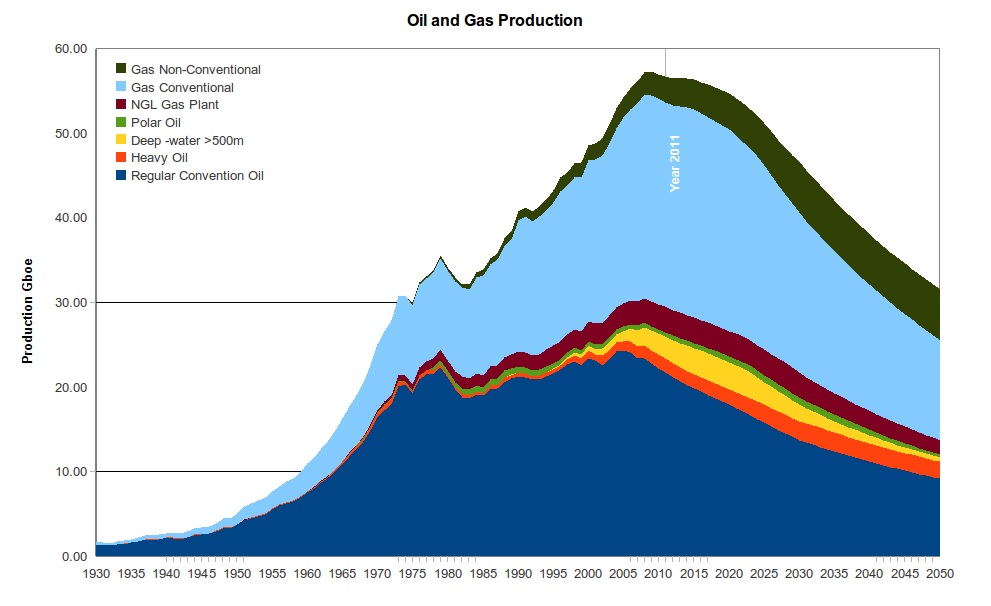
Renewable resources consist of energy sources like, wind, solar, geothermal, and tidal. These sources are not reduced significantly by their usage. Those energy resources are readily accessible, though reliance upon nonrenewables keeps us from transitioning to those more practical energy sources. As we pass the peak energy realities of nonrenewable energy sources like oil and coal, we see more and more of a need to make that transition to avoid a collapse. The peak of finite resources is the top production or discovery level of those resources, where they enter a decline, but consumption sadly continues on, often continuing it's increase.

In contrast, nonrenewable resources like oil, coal, and natural gas take such a significant amount of time to produce that there is no practical replenishment without our lifetime. Even obvious limitations on clean water for consumption can make that resource's limitations nearly nonrenewable. If we use all that there is available, that resources can be considered depleted. Those resources take significant time to replenish, so our reliance and usage must be responsible.

Peak Oil

Life After the Oil Crash


We consume four times as much oil as we discover today. At that rate, we will most certainly run out of oil eventually, most likely in a few generations at most.

28 November 2011

Earth's Population Carrying Capacity

http://www.cosmosmith.com/images/population_reciprocal.jpg

When scientists talk about overpopulation, they are usually referring to a population exceeding its biological carrying capacity which is defined as "the maximum number of animals that a specific habitat or area can support without causing deterioration or degradation of that habitat. Likewise, human overpopulation is when the number of people can not be permanently maintained without depleting resources and without degrading the environment and the people's standard of living. One might consider that if we were to consume less, we may be able to live within the carrying capacity of the planet. However, we should not reduce our consumption or degrade our lifestyle in order to claim that the human race is not overpopulated. Especially not as our number continues to increase.

Some may argue about how much vacant room there still is on Earth to hold billions and billions of more people. However, one must consider the fact that people are all made up of atoms of matter, and that matter which comprises our bodies has had to come from the earth itself. The majority of the matter in our bodies is in the form of water. At the rate our population is presently growing, within 1200 years, our oceans would be entirely converted into people as more and more water is required to build the bodies of people. This is not even considering the water required for drinking, washing, irrigating crops, sea life, etc.

Hypothetically, if the human population continued to grow at our present rate, the mass of people would be equal to the mass of the earth within 1600 years. In 2300 years at this rate, the mass of people would fill up our entire solar system, and if you were able to create matter from nothing in order to make people, in roughly 5300 years a great sphere of humanity with a radius of over 150 light-years would be expanding faster than the speed of light.

These are not predictions of things that may happen. Limitations will halt our growth much sooner. The intent is instead to illustrate how rapidly our population is growing and to express that this obviously can not continue. The growth occurs so suddenly that the population can become unmanagable without sufficient warning, after it is too late to prevent catastrophe. In short, we are in great danger of using up both space and resources.

Wonder about how much more human population can increase? Not much, since our world can only likely see small increases before we hit the limits of sustainable growth and expend our resources. I hope we never get that far...

Earth's Population Carrying Capacity

28 October 2011

Senators Raise ‘Serious Concerns’ About State Department Study on Tar Sands Oil Pipeline | Tar Sands Action

Three key senators today questioned the U.S. State Department about its dealings with a Canadian company seeking U.S. approval to build a crude oil pipeline from Canada to the Gulf of Mexico.

The State Department is responsible for deciding whether to approve the billion-dollar Keystone XL pipeline project. TransCanada, the company trying to build the pipeline, reportedly was permitted to screen private firms bidding to perform an environmental impact study.

“We find it inappropriate that a contractor with financial ties to TransCanada, which publicly promotes itself by identifying TransCanada as a ‘major client’, was selected to conduct what is intended to be an objective government review,” the senators said.
http://cdn.lightgalleries.net/4bd5ec0174be3/images/tar_sands_ex_-37-1.jpg 
Anyone still think that this process is any less destructive to our environment than oil rigs that spill into our oceans or fracking that destroys the water table? These companies and our supporting government are just bowing to the almighty dollar, discarding environmental concerns.

Senators Raise ‘Serious Concerns’ About State Department Study on Tar Sands Oil Pipeline | Tar Sands Action

Environmental groups have raised new concerns about the close ties between Barack Obama, Hillary Clinton and lobbyists for the controversial Keystone XL project to carry crude from the tar sands of Alberta to the refineries of Texas.

Friends of the Earth said on Thursday they were expanding their freedom of information request for emails between State Department officials and the pipeline company after learning of seven more pipeline lobbyists who had worked on Obama and Clinton's presidential campaigns, or had ties to Bill Clinton.
http://www.oldottawasouth.ca/images/stories/OOS_tarsands_big.jpg

How long until we are literally mining in our own backyards for even more limited natural resources?
Environmental groups trying to block the pipeline had initially focused on the role of Paul Elliott. Elliott, the main lobbyist in Washington for TransCanada pipeline company, had been a senior official on Clinton's campaign in 2008."The presence of so many former Clinton associates on the lobbying roster for polluter clients on a high-profile controversy suggests a clash with the repeated campaign pledges of greater transparency and tougher dealings with lobbyists by Secretary Clinton's boss, President Obama," the blog said.


Concern over close ties between Obama, Clinton and tar sands

NY Times Leading Media Fight Against Fracking

Hydraulic fracturing, or "fracking," got a clean bill of health this week in the first scientific look at the safety of the oil and production practice.
But the headlines about the study did not always reflect that. Many, such as "Scientific Study Links Flammable Drinking Water to Fracking," pointed toward the fracturing process as a culprit. Even the press release accompanying the study was titled "Hydrofracking Changes Water Wells."
The NY Times is probably singularly responsible for the new PR barrage of pro-mining industry processes in the States. The efforts against the industry are due to concerns over destruction of the water supply in the upper Hudson river valley. Imagine what would happen if the NYC metro were unable to meet the clean water needs of the entire population. We could never truck in enough drinking water to sustain the population, the metro would be wiped out.
People in the oil and gas industry commonly say "fracking" to describe just one part of the whole gas exploration and production process. Chemical-laced water and sand are blasted underground to break apart rock and release gas. Purists would say it is not really even part of "drilling" but actually the "completion" phase. The study released this week, done by scientists at Duke University, suggested that gas drilling causes methane gas to leak into people's water and sometimes their homes (Greenwire, May 9). But methane contamination is not caused by injecting chemicals down the well. It is caused by bad well construction during drilling.
But to many outsiders, particularly industry critics, fracking and drilling are the same thing. Advances in fracturing technology made possible the current shale gas drilling boom, so they have taken to lumping all shale gas production under the banner "fracking," deeming it a new form of natural gas drilling.
http://www.desmogblog.com/sites/beta.desmogblog.com/files/blogimages/Natural_Gas_Fracking_0.jpeg
The study released this week, done by scientists at Duke University, suggested that gas drilling causes methane gas to leak into people's water and sometimes their homes (Greenwire, May 9). But methane contamination is not caused by injecting chemicals down the well. It is caused by bad well construction during drilling.
Environmentalists and other industry critics consider this distinction to be nothing more than word games concocted by oil and gas lobbyists. Whatever you call it, they say, gas production is fouling air and water. Spills and methane contamination fall under existing state and federal regulations. Fracturing, by contrast, received a specific exemption from the Safe Drinking Water Act from a Republican Congress and then-President George W. Bush in the 2005 energy bill.

Baffled About Fracking? You're Not Alone - NYTimes.com

28 September 2011

Fracking, Gasland, and Disinformation

The film Gasland presents a ground-level view of the damage that results from hydraulic fracturing (fracking) to extract natural gas. The damage done is not worth the resources extracted.


After watching these, look at the other related videos on YouTube to see how significant the impact of fracking really is.