America's "war on terror" never ends. Neither does Britain's. After London was named host for this year's summer games, terrorist fears were stoked. Former Australian/UK British civil servant Peter Ryan performs security consulting services. He's advising the International Olympic Committee on London preparations. His consultancy thrives on hyped threats, real or otherwise. After the city was named host in 2005, he told organizers to "think the unthinkable." Besides other advice, he said: "You are not just thinking about football hooligans, getting drunk in a pub and causing trouble." "You are dealing with a different animal, completely new threats - suicide bombers and protecting the critical infrastructure. You cannot have a power station going down and all the lights going out." He said athletes' food and water supplies must be protected. Check for poisons, he advised.
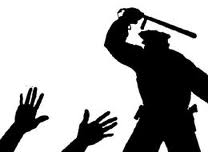
How is this the best response to an accusation of police violence, met with more violence? Rather counterproductive to me...
When mostly Latino residents in an Anaheim, California neighborhood gathered to protest a police shooting, the cops responded by...shooting rubber bullets and siccing a police dog on a mother holding an infant child.
Below is a report from local TV station KCAL, which incorporates amateur video gathered on the spot. The result is a trenchant reminder of the distributed nature of surveillance in today's world. Reason has been covering this power shift extensively (see this video about the killing of homeless man Kelly Thomas by Fullerton, California police and the way citizens sparked an investigation). It's obviously a good thing that law enforcement at all levels is being held more accountable for its behavior but I also sometimes wonder about the irony that former Reason staffer Radley Balko (of The Agitator and Huffington Post) noted in this 2011 interview: Police are almost certainly more respectful of civil liberties than they were 50 years ago. What's changed is that regular people are more empowered to capture and circulate bad actions by the cops.
Having noted that, this is some messed-up video below.
[How did he get people on his side? He did it by promising jobs to the jobless, money to the money-less, and rewards for the military-industrial complex. He did it by indoctrinating the children, advocating gun control, health care for all, better wages, better jobs, and promising to re-instill pride once again in the country, across Europe , and across the world. He did it with a compliant media – did you know that? And he did this all in the name of justice and …. . … change. And the people surely got what they voted for.] Note: "If you think Obama, think again for this was Hitler. See the parallels? I saw them clearly arise in Bush #42 and Clinton #43, but with Obama #44 there is a definite match. We are in the ENDGAME. Is it too late? Should STHF can we expect outside rescue per se since UN |NATO would side with the US de facto dictatorship. JIMO"
Quote: "I have never been so afraid for my country and for my children as I am now" is word.
Early last night I sat and watched Dr. Suzanna Hupp's testimony to Congress on gun laws after the tragedy at Luby's October 16, 1991, in Killeen, Texas.
Sadly, there was another shooting tragedy in Aurora, Colorado late last night, near another preventable tragedy: Columbine.
I am sure that many will call for increased gun laws, but as always these are hollow and fail to take into account the reality that criminals will not heed laws, that is their nature. More gun laws only negatively impact the liberties of law-abiding citizens. Calls to ban high-capacity magazines and assault weapons were proven to increase violent crime during the Assault Weapons Ban of 1992. There is a reason the Brady Campaign failed to keep the AWB on the books; it was a failure, a solution to a problem it created itself.
As Hupp correctly suggests, when a person commits these sort of acts, it is an illness, a mental problem that compels them. No law will prevent their intended actions, only the dedication of law-abiding citizens to protect each other in these situations. Violent criminals like these examples are like rabid dogs. The focus needs to be on those politicians willingly legislating away the right to defend ourselves from them.
Law enforcement's duty is to respond, by which time the tragedy is usually over. Many courts have ruled that police have no duty to protect, which can only lead us to understand that we have to defend ourselves. If this means breaking bad laws, so be it. A right the judicial body will never disclose is that of nullification. A jury can set a precedent and strike down a bad law simply by failing to convict a defendant of a charge.
It is statistically proven that allowing citizens to arm themselves decreases crime rates. All we need to do is consider the increases in violent crimes in places like Chicago, Los Angeles, New York City, Philadelphia, even the United Kingdom and other locals to see that the solution is obvious if only we would consider reality instead of relying on emotional arguments and opinions. Gun control encourages criminals to commit violent crime.
Remember this the next time you consider abiding by a poorly-conceived gun law and ask yourself if it makes you and your loved ones any safer. As Suzanna Hupp put it, I would rather be charged with a crime, defending the lives of those I love, than to adhere to bad laws and have to bury them. This is why the Second Amendment was worded the way it is:
A well regulated Militia, being necessary to the
security of a free State, the right of the people to keep and bear Arms,
shall not be infringed.
Almost
everyone knows the country went through the wringer after the housing
bubble burst. Now a new bubble looms before us - the higher-education
bubble.
Scholars and economists at the Mises and Cato Institutes have been campaigning to increase awareness about this issue for years. Those who understand market economics and the downsides of government interventionism are keenly aware of what happens in these situations.
Just
as easy money, lowered lending standards and political hype came
together to vastly overinflate the housing sector, a combination of easy
money (federal grants and loans available for nearly every student),
lowered academic standards (colleges that readily accept students with
pathetically weak basic skills) and political hype (the notion that
getting a degree will guarantee a huge boost in earnings) have produced a
vastly overinflated higher-education system.
Why would any lending institution support a student who wants to take
out tens of thousands of dollars in student loans to pursue a liberal
arts degree, or another field in which the student is unlikely to gain
employment sufficient to pay back loans? Lenders in the market see great
risk, so they don't loan. The government steps in and guarantees the
loans, so the universities accept the student anyway. And tuition costs skyrocket as a direct result.
The
higher-education bubble has been inflating for decades, and it’s ready
to burst, or at least deflate. That’s because many Americans are
realizing that the huge cost of college is often a waste. Whereas
college degrees used to be regarded as sure-fire investments, the labor
market has become glutted with people who have been to college but can’t
find “good” jobs.
Did you know that 22 percent of customer-sales representatives and 16 percent of bartenders have bachelor’s degrees?
Furthermore,
at many schools, academic standards have fallen to the point where
students can coast through without learning anything worthwhile. As University of Tennessee law professor Glenn Harlan Reynolds
recently wrote, “The higher education bubble isn’t bursting because of a
shortage of money. It is bursting because of a shortage of value.”
All we need to do is look at programs or industries where the government steps in to guarantee loans in this country to see how costs to consumers rise as a result. Higher costs are also passed along to taxpayers if those markets are subsidized. It's a failure of epic proportions, but one where the spoils of which are so willingly accepted despite the likely end result and market reactions.
Both of the following examples are from a year ago, and they were not the first warnings from market economists.
A college degree once looked to be the path to prosperity. In an article for TechCrunch,
Sarah Lacy writes, "Like the housing bubble, the education bubble is
about security and insurance against the future. Both whisper a
seductive promise into the ears of worried Americans: Do this and you will be safe."
But the jobs that made higher education pay off during the
inflationary boom, kicked into high gear by Nixon waving goodbye to the
last shreds of a gold standard, came primarily from government and
finance.
In 1990, 6.4 million people worked for federal, state, and local
governments. By 2010, that number had grown almost 6 times — to 38.3
million — with many of these jobs being white-collar.
Without sufficient private market jobs to support the revenue needs of the government (taxation of labor), it is easy to see how decreasing revenues can be a problem when paired with ever-increasing government spending. The appearance of cutting budgets is just that; appearance. Spending is cut for future budgets, and is usually cut from proposed increases, not overall budgets. More private market jobs are needed, not public sector. Public jobs contribute a net loss, not a gain.
In 1990, the financial sector was less than 7.5 percent of the
S&P 500. By 2006, this sector had grown to 22.3 percent of the
S&P, and that year the financial sector constituted 45 percent of
the index's earnings.
One of the major complaints of the Occupy Wall Street
crowd, many of whom have taken on significant student debt, is that the
cost of college is too darn high. And they're right, but not because of
greedy corporate fat cats. No, the real guilty party here is federal
politicians, who for decades have been fueling high profits — and prices
— at both for-profit and nonprofit schools.
Guaranteeing loans promotes those
producers to increase costs to consumers. When it is student loans, that
results in higher tuition costs, despite a lower likelihood that
students will ever be able to pay them back. Those tuition costs are
passed on to taxpayers as well without consent, and without ever
enrolling in universities or receiving services. There is a reason
private lenders will not invest in many students, but big government
sure will, at the expense of other people. But we all are the other
people...
Wait. Big profits at nonprofit colleges? Yes, money has been piling
up even at schools you thought had no interest in profit. And
Washington, D.C., is the biggest hand feeding the beast.
Thanks to recent congressional hearings and battling over new
regulations for for-profit schools, most people — including many
college-aged, profit-disdaining Wall Street squatters — are probably at
least vaguely aware that for-profit colleges are making good money.
Anyone care to point out the next bubble
being inflated now? I'll give you a hint; other countries which took
this route saw increased costs and decreased quality.
EconMatters: Since the Global Community all the sudden seems to be preoccupied with Market manipulation even though the authorities knew it was a problem for over 5 years with Libor Rate Fixing. It is high time authorities look at the Crude Oil market which has been(...)
This is an issue with many markets for goods and services, especially oil and even precious metals. My belief is that this is a method by which the dollar is being propped up as a continued viable global currency, a safe haven for investments. But every fiat currency crashes following inflation and devaluation. And we are probably nearing the end of the life cycle of this one as well.
Consumers do individually have a somewhat finite amount of money to put
toward spending in markets, so they tend to get the most they can for
the money they have. Policymakers tend to look past the inefficiencies
and waste (deadweight loss) created as unintentional consequences of
their fiat actions. Consumers actually have less money value in the
long-run, due to rising
inflation rates and the devaluation of currency already in circulation
as new money gets minted and created by fractional reserve banking.
While a portion of the population may gain from such measures as
increased tax rates on some products, the social good is not maximized
through this method, as the most efficient product in the market is not
allowed to equalize itself naturally. Without interventionist policies,
oil costs would normalize (saying goodbye to wild fluctuations in market
costs) and slowly decline as the finite resource slides down the slope
toward inefficiency in terms of EROI. Alternative energy sources to oil
would become more appealing to both consumers and producers (and
investors) in a free market as the costs of production of oil increase,
as it's supply decreases (as it's done since about 1971).
I'm not all
that surprised to see policymakers laughing off Hubbert's research from
the mid-1950s, only that it is done so overtly. At least most of the tax
on oil consumption is laid at the feet of those consuming it. If only
the same could be said for the corn-for-fuel market...
Ah, the Tenth Amendment, the one that reminds us that we live in a nation which is built of people, not politicians, and that everything distills down to individuals. States are above nationalism, and individuals above all else. Obama declaring his mandates as the word of gods is a mite trite. And even proposing legislation such as this is a gentle reminder to despots that the power in society is in the hands of the collective individuals, and that the breakdown in liberty only stretches so far before patience snaps.
By The Watchdog | July 18, 2012 President Obama will not like this. He thinks his word alone is law. He thinks the American people must submit to his achievement called Obamacare. Despite the mass protest and phone calls flooding capital hill saying to our elected congressmen saying "do not pass this bill into law". [...]
Imagine that. Growing food and using it instead as fuel leads to food shortages. And it's subsidized, so consumers have less resources with which to purchase food goods after undue, unnecessary taxation. Hello Dust Bowl, haven't seen you in a while...
Are you ready for the next major global food crisis? The price of corn hit an all-time record high on Thursday. So did the price of soybeans. The price of corn is up about 50 percent since the middle of last month, and the price of wheat has risen by about 50 percent over the past five weeks. On Thursday, corn for September delivery reached $8.166 per bushel, and many analysts believe that it could hit $10 a bushel before this crisis is over.
The worst drought in the United States in more than 50 years is projected to continue well into August, and more than 1,300 counties in the United States have been declared to be official natural disaster areas.
So how is this crisis going to affect the average person on the street? Well, most Americans and most Europeans are going to notice their grocery bills go up significantly over the coming months. That will not be pleasant. But in other areas of the world this crisis could mean the difference between life and death for some people. You see, half of all global corn exports come from the United States.
So what happens if the U.S. does not have any corn to export? About a billion people around the world live on the edge of starvation, and today the Financial Times ran a front page story with the following headline: "World braced for new food crisis". Millions upon millions of families in poor countries are barely able to feed themselves right now. So what happens if the price of the food that they buy goes up dramatically?
[...]
About 30 percent of the soybean crop was in poor-to-very-poor condition, which compared with 10 percent a year ago.
Conditions for both crops are expected to worsen in Monday's agriculture agency report.
More than half of the country is experiencing drought conditions right now, and this is devastating both ranchers and farmers. Right now, ranchers all over the western United States are slaughtering their herds early as feed prices rise. It is being projected that the price of meat will rise substantially later this year.
[...]
If prices rose that fast last year, what will those statistics look like at the end of this year if this drought continues?
Sadly, America is not alone. According to Bloomberg, the U.S. is not the only place that is having problems with crops right now….
Dry weather in the U.S., as well as the Black Sea region; a poor start to the Indian monsoon and the possibility of emerging El Nino conditions suggest agricultural products may rally, Barclays said in a report e-mailed yesterday.
And all of this is very bad news for a world that is really struggling to feed itself.
In many countries around the globe, the poor spend up to 75 percent of their incomes on food. Just a 10 percent increase in the price of basic food staples can be absolutely devastating for impoverished families that are living right on the edge.
You may not have ever known what it is like to wonder where your next meal is going to come from, but in many areas around the world that is a daily reality for many families.
The United Nations estimates that 267,000 Yemeni children are facing life-threatening levels of malnutrition. In the Middle East's poorest country hunger has doubled since 2009. More than 10 million people — 44% of the population — do not have enough food to eat, according to the United Nation's World Food Program.
In the United States, we aren't going to see starvation even if nearly the entire corn crop fails. Our grocery bills might be more painful, but there is still going to be plenty of food for everyone.
In other areas of the world, a bad year for global crops can mean the difference between life and death.
The 1,450 mile long Colorado River is probably the most important body of water in the southwestern United States.
Unfortunately, the Colorado River is rapidly dying.
People need to wake up because we have some very serious water issues in this country.
In the heartland of America, farmers pump water from a massive underground lake known as the Ogallala Aquifer to irrigate their fields.
The problem is that the Ogallala Aquifer is rapidly being pumped dry.
Government workers staged rallies in dozens of Spanish cities today as the country's parliament passed the latest round of austerity measures. The ruling conservative Popular Party used its majority in parliament to push through the measures.
More pushback around the world as collapse looms on the horizon. These sort of efforts by the state will only promote collapse, not prevent it.
The Libor rate rigging scandal was all about keeping the financial system and the big banks from failing. Forget prosecuting the perpetrators because Roberts says, "The minute those interest rates go up, the loss to people will just dwarf the interest rate loss." Fraud is now part of the system that keeps it from crashing. Roberts has a PhD and was responsible for economic policy at the Treasury. He says, "We are probably headed for a crash anyway because I don't think they can maintain this forever." Join Greg Hunter as he goes One-on-One with Paul Craig Roberts.''
While
I hardly believe one person is responsible for the success or failure
of collective economics, especially on a national or international
level, US president Barack Obama is so misinformed (or willfully
ignorant) of economic principles that he actually believes innovation
comes not from entrepreneurs, but from government intervention.
President Obama said in a speech at
the weekend that governments and not individuals create jobs, telling
entrepreneurs: 'If you've got a business - you didn't build that.
Somebody else made that happen.'
He added: 'You didn't get there on your own. I'm always struck by people who think, well, it must be because I was just so smart.'
The inflammatory campaign speech
comments underline the extent to which Obama believes that the state
rather than ordinary citizens create jobs and wealth.
If
you have a great idea, invest your time and resources into that idea,
and you succeed, I believe that you are responsible for your success and
deserve whatever profits or acknowledgement you receive, not the
government. The state and it's interventionist policies, regulations,
and ever-increasing taxation stifles innovation, impedes entrepreneurs,
and holds back advancement, preventing any benefit or social good.
Obama's
criticism of Romney (I honestly can't tell much difference between
Obamney) and capital investment firms is misplaced. Without firms such
as Bain, companies like Howard Johnson, where Obama fondly recalls
childhood family memories, would have faded into history during the
Great Depression.
“Entrepreneurs embody the promise of America: the idea that if you
have a good idea and are willing to work hard and see it through, you
can succeed in this country. And in fulfilling this promise,
entrepreneurs also play a critical role in expanding our economy and
creating jobs.” – President Barack Obama, January 31, 2011
I
am having a hard time keeping up with the flip-flops from the Obama
regime. The level of narcissism Obama maintains is nearly a
psychological issue. If he believe half of what he claims, he is
mentally unfit for public office. If he is simply a mouthpiece, reading
speeches tailored for him, he is the puppet many claim. And we have a
long line of potential replacements willing to tow the same line.
The regime wants to control and manage the entrepreneurial spirit, which is a statist goal.
The recent White House announcement
of a new government program to promote entrepreneurship must signify
that the Obama Administration finally “gets it” about job creation and
economic recovery, right? Certainly free-market conservatives can agree with the President’s inspiring words. But …
The
regime wants to have the final word on what will be allowed in the
market and what will be suppressed. This is not innovation, but
interventionism, which is known instead for destroying innovation. Big
surprise there.
The problems, as always, emerge in the details of the program. This
“coordinated public/private effort” appears to be just another head-fake
in the direction of capitalism with the intention of growing more
government.
We
do not have true capitalism, and have not for maybe a century or more.
True innovation thrives without regulation and governmental burden, not
under it's thumb and seeking it's approval. What we have is state-capitalism
(it's no big secret, even the Economist understands this), with it's
complex system of regulations, it's involuntary and intrusive taxation
system for redistributing wealth from those who produce to those who do
not. While many establishment supporters claim capitalism is the cause
of our economic woes, they are at least correct about the methods, if
not the name itself.
America saw free markets in the Not So Wild, Wild West,
where government was absent until the turn of the twentieth century.
Property rights were maintained, entrepreneurs thrived, society
benefited, jobs grew, taxation did not yet exist before the government
saw an opportunity to feed. Once the state stepped in, all that changed,
just as it has changed across the world as the interventionism and it's
proponents intervene and claim that they are the reason for the success
of others, despite being an obstacle rather than a support system.
Watching the Obama speech in Austin, Texas this evening, an exercise in frustration. Listening to him speak about high education and healthcare costs, it is more than apparent that he either had little understanding of interventionist government policies in regards to microeconomics, or he is simply pandering to the crowd. Or maybe he actually believes that a failure of economic policy for almost an entire first term is somehow a success.
Either way, he is no better than his predecessor, and in some terms likely significantly worse.
from Progressive Radio Network » Lifeboat Hour | Progressive Radio Network http://prn.fm/2012/07/15/lifeboat-hour-071512/?utm_source=rss&utm_medium=rss&utm_campaign=lifeboat-hour-071512
from Progressive Radio Network » Lifeboat Hour | Progressive Radio Network http://prn.fm/2012/07/08/lifeboat-hour-070812/?utm_source=rss&utm_medium=rss&utm_campaign=lifeboat-hour-070812
New York Times Economist and Nobel peace prize winner Paul Krugman has some candid advice for the US government: forget budgets and start spending.
The alarming advice came while on a panel discussion in Washington, D.C. last month. The panel was entitled "End This Depression Now" and focused on the economic recourse the country had in the wake of current economic instability.
Krugman was asked what he would do "If we made Paul Krugman a dictator for a period of time?" After applause from the audience Krugman noted that the "biggest" thing holding back the economy has been "unprecedented cutback in state and local spending." Krugman, a committed Keynesian, argued for massive government hiring in the fields of construction and education.
Wow. Krugman is still the idiot most people with even the slightest economic understanding know him to be. Put it this way; if your household is broke, in debt more than can ever e paid back? Why would it be responsible to increase debt? Krugman thinks its okay for the government to do that. The problem is that decreasing private sector jobs can not support increased public sector jobs and higher levels of government spending. Krugman and likeminded tools just don't understand reality.
This tactic, he said, would reduce unemployment to below 7% and would only cost "a few hundred billion a year," which the economist explained "is not that much." But the real goal for Krugman is a 0% unemployment.
O achieve zero unemployment, public sector jobs and taxation must also go to zero. That is the real world, one we saw in the past when governments had little or no intervention into free markets. That is the only practical and possible method to get to zero unemployment. With Krugman's ideas, we can't get there from here.
To achieve this employment utopia, we must encounter a catastrophe on par with WWII according to Krugman:
"What took us out of the Great Depression… it was Europe's entry into WWII and the US buildup that began in advance. We were at full employment before Perl Harbor. So if we can get something that will cause the government to say, 'Oh never mind those budget things, lets just spend and do a bunch of stuff."
During those prewar times, we had free markets and low unemployment. Then government stepped in and it's been downhill since then.
Why do so many fall into the false paradigm of class warfare? Do so many truly believe that by taxing the rich we can resolve the problems caused by giving the government more resources to squander inefficiently? Do so few understand that state interventionism is the problem, and that increasing its scope and authority will have negative effects rather than positive?
Why don't we just abolish taxes and let the government fend for itself?
Healthcare was cheaper and better before government interventionism ruined it, just as with everything else it touches. Allowing the state more authority over this market has consistently increased costs and decreased quality. Why are so many ignoring reality?
Taxation creates unemployment. Subsidization in turn increases costs. Moving services to the public sector increases inefficiency and promotes abuse, as there is no market profit to maintain a necessary balance.
What disturbed me the most is that people generally fall for the false left-right paradigm and focus more on fighting perceptions an failing to understand the market forces which move industries and our economy. I so many people believe out economy is broken? Why do most of them stop at simply complaining about. Why not learn economics and understand the actual root causes of these problems, rather than focus on the results and fail to grasp even the basics?
Increasing the tax burden on any one segment (or all segments for that matter) will only encourage increased waste and spending while continuing to ignore the fact that government interventionism through regulation and taxation of markets is what has brought us to the precipice.
An eye for an eye makes the world blind as Gandhi said. Anyone who believes that more government is the answer for too much government is being willfully ignorant. Using the state's monopoly on force to inflict the will of any segment of society on the whole is not a solution, but a propagation of the problem. We are harming ourselves when we try to use the state to harm others.
There are so many ways that Obamacare was and is wrong. If its a tax, the Supreme Court can not hear the case until after it has been levied, which would be a few years from now. Under the Commerce Clause, it is not Constitutional to tax citizens for not participating in commerce. Any way you cut it, this legislation is bad for consumers. At best, it will increase inefficiencies and costs to taxpayers. At worst, public healthcare collapses and proves free markets are a more practical and cost-effective alternative to public choices, especially where there is no choice for the public. Even Congress exempted itself, which speaks volumes.
Under the Tenth Amendment, we already have 26 states opposing and leaning toward nullification this law, or tax, or whatever. Any way you look at it, government interventionism into health care only leads to a less than optimal result.
Even Obama can't decide which it is. Or isn't.
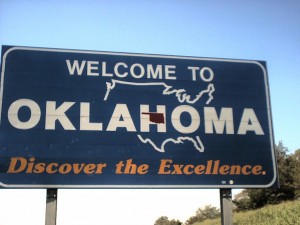
Even Oklahoma gets it:
OKLAHOMA CITY – State Rep. Mike Ritze plans to reintroduce a bill to "nullify" the individual mandate in the 2010 federal health care legislation in Oklahoma.
"I disagree with the Supreme Court's ruling and believe that state governments were intended to serve as a check on the federal government," said Ritze, R-Broken Arrow. "The Patient Protection and Affordable Care Act, which is better known as ObamaCare, is an example of federal overreach and my legislation will authorize the state to resist it and ban the enforcement of it."
Ritze said his legislation would authorize the Oklahoma attorney general to defend citizens who fail to purchase health insurance against the federal government and criminalizes the enforcement of the individual mandate.
"My hope is that ObamaCare will be repealed, but I do not think that means we have to wait for the repeal to happen. Oklahoma lawmakers should do what they can to support our choice to make our own health care decisions," Ritze said.
###
TAKE ACTION
Nullify in YOUR state. Contact your state reps and urge them to introduce the Nullification Act NOW. Or push them to pre-file for the 2013 legislative session. They Need to hear from you early AND often!
from Progressive Radio Network » Lifeboat Hour | Progressive Radio Network http://prn.fm/2012/07/02/lifeboat-hour-070112/?utm_source=rss&utm_medium=rss&utm_campaign=lifeboat-hour-070112
from Progressive Radio Network » Lifeboat Hour | Progressive Radio Network http://prn.fm/2012/06/24/lifeboat-hour/?utm_source=rss&utm_medium=rss&utm_campaign=lifeboat-hour
from Progressive Radio Network » Lifeboat Hour | Progressive Radio Network http://prn.fm/2012/06/17/lifeboat-hour-061712/?utm_source=rss&utm_medium=rss&utm_campaign=lifeboat-hour-061712
I wonder where the money will come from? The country is as broke as its private sector.
Osborne unveils £140bn scheme to kick-start stagnant economy.
Interventionism is constantly proven to stifle markets, not encourage a return to positive activity. I would expect that this injection of inflated capital will not promote long-term growth. It never does.
The Federal Reserve is propping up the entire U.S. economy by buying 61 percent of the government debt issued by the Treasury Department, a trend that cannot last, Lawrence Goodman, a former Treasury official and current president of the Center for Financial Stability, writes in a Wall Street Journal opinion article published Wednesday.
"Last year the Fed purchased a stunning 61 percent of the total net Treasury issuance, up from negligible amounts prior to the 2008 financial crisis," Goodman writes.
Goodman also warns that U.S. economy and markets are “at risk for a sharp correction” if conditions aren’t “normalized.”
"This not only creates the false appearance of limitless demand for U.S. debt but also blunts any sense of urgency to reduce supersized budget deficits."
With the government relying on debt rather than production to drive growth (falsely), it's only a matter of time until that house of cards collapses.
The U.S. government is growing increasingly more dependent on borrowing to finance itself, with net issuance of Treasury securities hitting 8.6 percent of gross domestic product (GDP) on average per annum, more than double levels before the crisis.
Fed intervention in the government debt market makes demand for Treasury bonds appear higher than it really is, as foreign creditors and other investors have fled U.S. government debt instruments and are looking elsewhere until the government makes serious attempts to curb spending and narrow its gaping deficits.
Americans got an unprecedented peek at the wealth of the Federal Reserve’s top ranks this week, when the central bank released nearly 600 pages of financial disclosure documents from its current regional presidents.
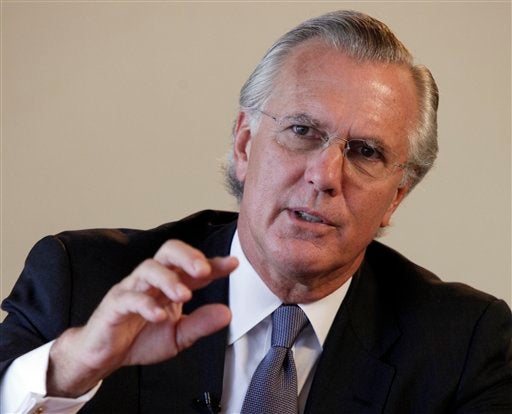
If
the dollar is stable and the Federal Reserve is creating positive
economic changes, why does Richard Fisher, the president of the Dallas
Fed, own 7,000 acres of farmland and a million dollars worth of gold? If
the heads of the Federal Reserve banks believed that our financial
system is the best thing since sliced bread, then why would they not buy
government bonds instead?
Because the dollar is constantly reducing in value (although it is fiat
and has no intrinsic value) through the actions of the Fed. The dollar
has not risen in value in our lifetime. The only way the banking cartel
can continue to monetize debt (fractional reserve banking) is to devalue the currency already in
circulation (which in essence steals from those holding dollars in
savings). At least Bernanke invested in the system to some extent to
foster confidence, though that public confidence is in constant retreat.
The following table shows the minimum and maximum value of the assets reported by each Fed president. (Chart courtesy of economix)
Maybe this is why even Fisher believes that buying bonds is risky, and he has put so much of his wealth into tangible assets like precious metals and the technology industry.
Sounds like he is recommending that others reduce or
limit bond investments. While I support the right for investors to get
rich in private markets, it speaks volumes when they do so while
recommending not to invest in public investments like treasury bonds.
Might this be foreshadowing or a sign of things to come? I only wish those running the banking cartel that controls the Fed and the treasury would also recognize reality.
Why buy a treasury bond that returns 3.5% when that barely matches the
inflation of the dollar by the Fed? Maybe that's why the Fed is
increasing the frequency and volume of bond purchases to make up for
reduced demand by private buyers...
Indiana has become the first state to legally permit residents to shoot at police if they feel their property is being illegally breached by an officer.
Proponents of the law, including its author, state Sen. Michael Young and the National Rifle Association, say it was necessary following a state Supreme Court ruling last year which said "there is no right to reasonably resist unlawful entry by police officers," Young told Bloomberg News.
Violence against others is unquestionably wrong on any situation. When one is the victim of an offense by another, the natural and constitutional rights to protect life and property stand. When the state undermines those rights, society suffers.
The measure amends the 2006 so-called Castle Doctrine bill that allows deadly force to stop illegal entry into a home or car. The term "public servant" was added following the court's ruling.
Just days before recall elections, Wisconsin Governor Scott Walker sent out a news release saying the union reforms he pushed are already saving school districts millions.
I actually have to hand it to Walker, he is making progress in cutting wasteful spending and relieving potential tax burden the private sector labor force.
From Madison to Hudson, angry protesters promised dire consequences if Wisconsin lawmakers voted to strip government union members of some of their collective bargaining rights. The reforms did pass and a Madison think tank says they're already having an impact.
Public unions should rightly have little bargaining power, as their market is driven by private sector successes. We were warned against allowing public unions decades ago, but socialism sees no limit to it's malignant potential in a free society.
"With collective bargaining not an option for teachers outside of salary concerns, we're seeing a lot more freedom for these school boards to find new and creative ways to save money," said Christian D'Andrea of the MacIver Institute. His organization says many school districts are shopping around for health insurance for the first time. In the past, they had to buy it from the Wisconsin Education Assocation, the teachers union.
Imagine that. Shifting to private sector markets for services and goods saves significant resources over public alternatives, where accountability is no more than a word and politicians come and go through the revolving door, replaced by another who serves special interest groups rather than the true social good. They were forced to purchase marked-up, low-value insurance and not given choices. This lack of choice is a big problem with unions. Rock out with voluntarism.
"The problem there is that, once you become static... and this is true with any company, I'm not just picking on WEA. But once you become static within one company, you tend to settle for higher rates," said D'Andrea.
"It means that we can save teacher jobs and really provide a better value for the taxpayers of the state," said Senator Sheila Harsdorf of River Falls. Harsdorf faces a recall election Tuesday because of her support for union reforms and Governor Walker's budget.
In Harsdorf's Senate district, MacIver found savings at Ellsworth, Prescott, Menomonie, Somerset and Hudson school districts. The Hudson Superintendent tells 5 EYEWITNESS NEWS her district stands to save more than $800,000.
"They would have seen that same savings if they'd done it in cooperation with the teachers," said Shelly Moore, a teacher in Ellsworth who is running against Harsdorf in the recall election.
This might be one of the few instances of politicians using the power of the state to promote social good and reduce forced coercion (mandatory union dues) on a captive audience (teachers). Usually the state is doing the opposite, reducing individual liberties and choices, while increasing burden.
Local teachers union President Kris Ohman (OH-mun) said before the union reforms, teachers were already agreeing to cheaper insurance options. Under state law, a district could limit an increase in teacher pay and benefits combined could be limited to 3.8%. If health insurance was more expensive, teachers would have to take less pay to offset it.
The last thing the public sector needs to be able to do is limit things which the private sector can not. If service costs go up in the private, they must be allowed to do so in the public, for it not the costs through taxation will increase disproportionately affecting private sector workers.
"So it had always been in our best interest to keep those costs down so that our pay could be comparable and competitive with districts around us," said Ohman.
TheMacIver Institute says if all districts in Wisconsin reconfigured teacher benefits packages, the state could save $451million.
The leader of the government regularly sits down with his senior generals and spies and advisers and reviews a list of the people they want him to authorize their agents to kill. They do this every Tuesday morning when the leader is in town. The leader once condemned any practice even close to this, but now relishes the killing because he has convinced himself that it is a sane and sterile way to keep his country safe and himself in power. The leader, who is running for re-election, even invited his campaign manager to join the group that decides whom to kill.
Judge Napolitano really sets the situation straight in terms of the outright illegal actions by the Obama regime to undermine the rights of foreigner dissidents. Obama and his despotic regime are continuing a foreign policy that creates hatred for America, rather than promoting peace. This has been going on as long as man has existed, but the population is tiring of being pawns. When a democratic black president wields unchecked power and ends up being the biggest warmonger in decades, you know things are on the verge of collapse...
This is not from a work of fiction, and it is not describing a series of events in the Kremlin or Beijing or Pyongyang. It is a fair summary of a 6,000-word investigative report in The New York Times earlier this week about the White House of Barack Obama. Two Times journalists, Jo Becker and Scott Shane, painstakingly and chillingly reported that the former lecturer in constitutional law and liberal senator who railed against torture and Gitmo now weekly reviews a secret kill list, personally decides who should be killed and then dispatches killers all over the world -- and some of his killers have killed Americans.
We have known for some time that President Obama is waging a private war. By that I mean he is using the CIA on his own -- and not the military after congressional authorization -- to fire drones at thousands of persons in foreign lands, usually while they are riding in a car or a truck. He has done this both with the consent and over the objection of the governments of the countries in which he has killed. He doesn't want to talk about this, but he doesn't deny it. How chilling is it that David Axelrod -- the president's campaign manager -- has periodically seen the secret kill list? Might this be to keep the killings politically correct?
Depending on whom you ask, the Obama administration has either executed hundreds of civilians abroad with poorly planned drone strikes or none at all. A new report, however, finally offers insight into those conflicting conclusions.
A New York Times article published on Tuesday unearths a lot of information about the White House's largely secretive drone program: despite being a hallmark of the presidency of Barack Obama, authorities working under the commander-in-chief — as well as Obama himself — are for the most part mum when questions arise about the administration's ongoing air strikes by way of unmanned robotic aircraft. In particular, the question of civilian casualties and the death toll of innocent Afghans and Pakistanis who have lost their life at the hands of Washington's war machine are often left unanswered or, even worse, addressed differently. According to the Times' latest write-up, though, the Obama administration has some scandalous opinions on who can and can't be killed by its murder program.
The White House convinces itself that the Obama-ordered air strikes overseas have not killed many civilians because, according to the president, any and all men near around a drone target are considered enemies of America and can be executed without being added to the count of civilian casualties.
"It in effect counts all military-age males in a strike zone as combatants, according to several administration officials, unless there is explicit intelligence posthumously proving them innocent," is how the Times report it. "Counterterrorism officials insist this approach is one of simple logic: people in an area of known terrorist activity, or found with a top Qaeda operative, are probably up to no good."
The worst part of the scandal is not that the idea alone is unconstitutional, but that the regime is investigating the leak reports and state propaganda media is focusing on that as well, rather than dealing with the situation they have created.
The president hasn't endangered national security -- and Congress is pursuing the wrong solution. America needs less classified info, not fewer leaks.
When Joseph Heller's literary heirs satirize the War on Terror's absurdity (for there is absurdity in every war), the treatment of classified information is sure to be as fruitful a theme as it was in Catch-22. For example, the CIA bombarded Pakistan last week with three days of drone strikes, ultimately killing Al Qaeda leader Abu Yahya al-Libi. This didn't surprise anyone, for the whole world knows that the CIA uses drones to target Al Qaeda in Pakistan. The drone program is nevertheless classified. The Department of Justice says as much when explaining to judges why it shouldn't be forced to litigate certain cases. And White House Press Secretary Jay Carney is forced into vague locutions when asked about drone kills. "Our intelligence community has intelligence that leads them to believe that Al Qaeda's number-two leader, al-Libi, is dead," he said last week. "I can't get into details about how his death was brought about."
That is essential context in the ongoing controversy over leaks in the Obama Administration. "A bipartisan Congressional chorus has been expressing concerns on cable news shows over national security leaks," Michael Calderone reported last week. "Lawmakers suggested that the White House had sanctioned intelligence disclosures for its own political gain, in an attempt to depict the president as strong and decisive when dealing with suspected terrorists."
Attorney General Eric Holder has even appointed two prosecutors to conduct leak investigations. (They're unlikely to end in prosecutions for revealing state secrets, as Charlie Savage explains.)
One thing I find amazing is President Obama's statement. "The notion that the White House would purposely release classified national-security information is offensive, it's wrong, and people, I think, need to have a better sense of how I approach this office and how the people around me approach this office," he said. "We are dealing with issues that can touch on the safety and security of the American people -- our families or our military or our allies -- and so we don't play with that."
That's nonsense.
Forget the White House generally. President Obama himself has purposely disclosed "national-security information" -- the existence of the CIA drone program -- that his own Justice Department and press secretary treat as classified. I'm glad he's done so. The notion that the United States government should wage ongoing war in multiple countries while keeping it secret from its own citizens is noxious. By my lights, the CIA drone program's existence should not be a state secret. Obama ought to declassify it.
Thomas Malthus Eugenics are alive and kicking
Nutrients and vitamins extract from edible goods
Legislate, sick populations - a higher rate of mortality
Food code (as it's known) Codex Alimentarius
Thin the herd, thin the herd, the great cull is coming down...
Develop virus market cure - exploit the panic
Contaminate by guile and stealth - a quick strum of the harp
Depopulate initiate - pharmaceutical companies
All fall down, all fall down, Codex Alimentarius
Thin the herd, thin the herd, the great cull is coming down...
Most of us must die...
Instigate wars in population density centres
Maintain population below 500 million
Immunise, irradiate, deregulate all toxins
Monsanto feed, Monsanto seed - all the bees are dying
Depopulation in every nation, follow the food code
All fall down, all fall down, Codex Alimentarius
Thin the herd, thin the herd, the great cull is coming down...
Well, here's a honest statement from the regime for a change:
On
Friday, President Obama inexplicably said 'The private sector is doing
fine.'" Since the president is completely out of touch, these middle
class workers talked about their experiences to remind him of the
realities of the Obama economy.
The
private sector of the economy is not doing fine. What's worse than
saying that it is fine is the idea that more public sector spending will
improve the private sector. No true economist would ever stand behind a
statement like that, especially when our own federal government is
barely above water in terms of debt. Our national debt is nearly equal
to revenue, so increasing the numer of government jobs will only make
that disparity even further top-heavy.
Most
economists not on the government payroll (or the Fed's) have been
saying that increasing government spending (and now debt-spending) has
zero chance of righting an economy which has been running numbers that
are beyond recession level and actually into depression territory (but
that won't be heard on state media outlets). Deficit spending only
exacerbates the economic problems and does nothing to counter the
source; government itself. As more and more rely on government for
income and handouts, and as fewer and fewer are able to pay in
(involuntarily, naturally), the imbalance becomes even greater and
likelihood of any true recovery slips further away.
As
someone who understands markets and the detriment of government
intervention in economics, Peter Schiff gives about the most qualified
and accurate rebuttal to those statist claims that more state scope and
authority is needed when that is exactly the root cause.
Peter Schiff : the
money that the government uses to pay the wages of the public sector
employees comes from the taxes that he imposes on the private sector ,
we should get rid of the government jobs , government jobs makes us poor
private sector jobs make us richer
If
anyone is surprised that interventionism consistently fails to correct
economic hard times, they need to look a bit more objectively at the
situation and actually learn about economics from a source other than
the state itself. As Mises said, "tu ne cede malis." He was right even before those doing economic damage today were even born.
The problem with government
intervention into markets is that increasing the money supply by the
Federal Reserve is the exact worst thing to do in the situation. It
creates a chain reaction that no monetary or public policies can stop.
In a nutshell, this is what happens when governments increase the money
supply and increase deficit spending in a false attempt to promote
economic growth:
What
happens when consumers are given money without a proper price
comparison? (consumer demand should drive producer supply) Prices
increase because there is more currency in circulation, rather than
higher levels of production. Prices rise as a response to the new level
of currency supply. What happens when prices increase? Consumers spend
less. What happens when consumers spend less? Producers cut production,
which leads to lower supply levels and lower labor demand, which in turn
leads to higher private sector unemployment. Unemployment can not be
negated by increased government spending or increased government jobs,
as a smaller private sector workforce leads to decreased tax revenues.
Funny how sometimes bad ideas have negative consequences, ain't it?
The resulting hyperinflation and economic collapse is not the subject of conspiracy theory, but of the history books. This is exactly what happened to the Weimar republic in 1923 (now Germany), to Russia in 1992-1993, to Zimbabwe
from 1999-2008, and many other countries around the world throughout
history. This is even what happened to the great empire of Rome, whose Dinarius
currency inflated until the economy collapsed around 230 AD. Once the
course is set, very little can be done to avoid disaster. If there were,
some of these collapses would never had occurred.
Interventionism
champions such as Ben Bernanke and Jamie Diamond are truly horsemen of
a financial apocalypse. Their job made easier by such willing victims.